When choosing a snorkel or dive mask, you'll often come across clear and black mask skirts. This isn't purely a cosmetic choice. The opacity of the silicone can change how the mask feels underwater.
The skirt is the soft silicone section that seals against your face. Clear silicone allows ambient light to pass through around the sides of the mask, creating a brighter, more open feeling. Dark or black silicone blocks this peripheral light, which can reduce glare, internal reflections and visual distractions.
For bright, sunny conditions, we generally prefer a dark skirt. For lower-light conditions or people who prefer a more open feeling, clear silicone has advantages. But fit should always come first.
Here's how clear and black mask skirts compare, and when we'd choose each.
Quick Answer: Clear or Black Mask Skirt?
Choose a dark or black skirt if you mostly snorkel or dive in bright, sunny conditions and want to reduce peripheral glare and reflections.
Choose a clear skirt if you prefer a brighter, more open feeling, want your face to remain more visible to your buddy, or frequently snorkel in lower-light conditions.
For most tropical snorkeling, we'd lean toward dark silicone as the better all-around choice, but fit should always come first.
What Is a Clear Skirt Snorkel Mask?
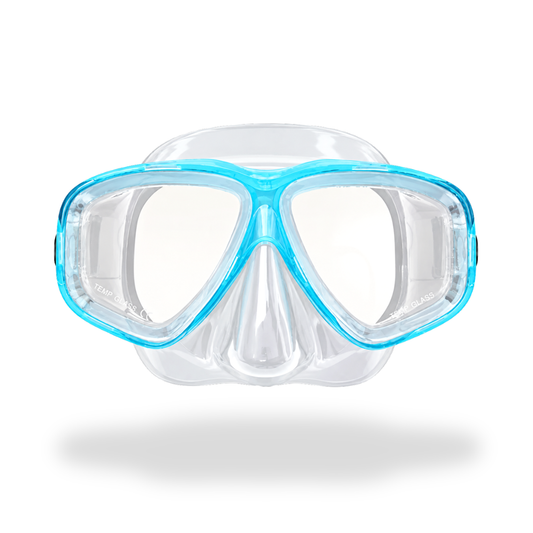
A clear-skirt snorkel mask uses transparent or translucent silicone around the face. Because light can pass through the skirt, the mask tends to feel brighter and more open.
Advantages of a Clear Mask Skirt
More ambient light: Clear silicone allows light to enter around the sides of the mask, which can be useful in overcast weather, deeper water, or early-morning and late-afternoon conditions.
More open feeling: Some snorkelers and divers, particularly beginners who feel enclosed in a mask, prefer the brighter feeling of clear silicone.
Your face remains visible: A buddy or instructor can see more of your facial expressions and visual cues through transparent silicone.
Disadvantages of a Clear Mask Skirt
More glare and reflections: In strong sunlight, additional light entering through the skirt can create distracting reflections on the inside of the lenses.
Shows its age: Clear silicone can gradually yellow or become cloudy with exposure to UV, sunscreen, oils and general use. This is mainly cosmetic, but it's more noticeable than on an opaque skirt.
What Is a Black or Dark Skirt Snorkel Mask?
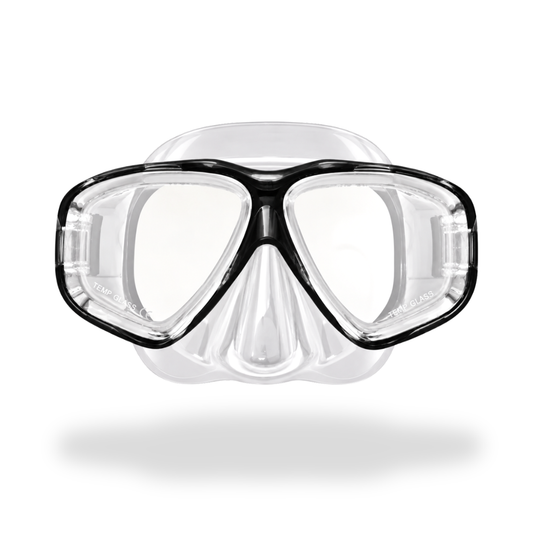
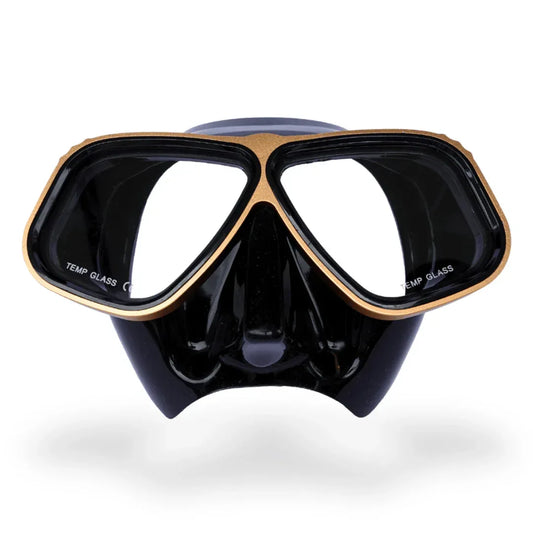
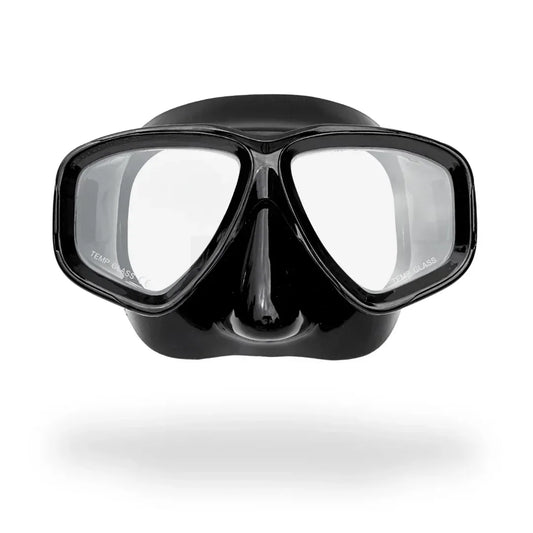
A black or dark-skirt snorkel mask uses opaque silicone around the face. Because light can't pass through the skirt, the view inside the mask feels more shaded and focused.
Advantages of a Black Mask Skirt
Less glare and reflection: Blocking peripheral light can reduce distracting reflections on the inside of the lenses, particularly in bright sunlight.
More focused view: With less stray light entering around your eyes, it can be easier to concentrate on what's directly in front of you. This is also why black skirts are popular with underwater photographers.
Well suited to bright conditions: In shallow, sunny tropical water, we generally prefer an opaque dark skirt because it reduces the amount of surrounding light reaching your eyes.
Hides discoloration: Dark silicone doesn't show yellowing or staining as noticeably as transparent silicone.
Disadvantages of a Black Mask Skirt
Can feel more enclosed: Blocking peripheral light can make the mask feel more closed-in, which some beginners dislike.
Darker feeling in low light: In overcast, deeper or otherwise darker conditions, some people prefer the additional ambient light provided by clear silicone.
What About White or Colored Mask Skirts?
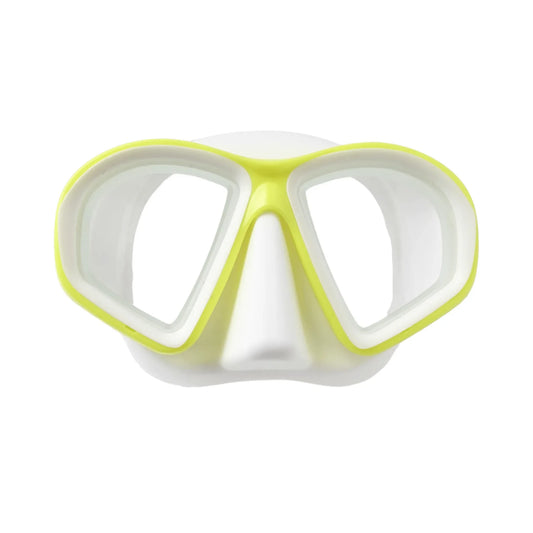
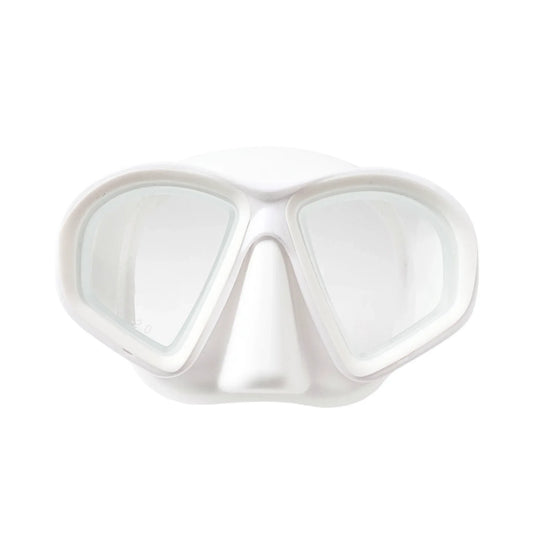
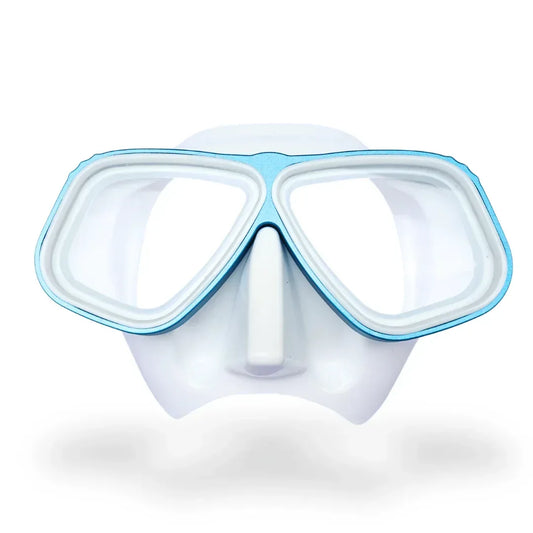
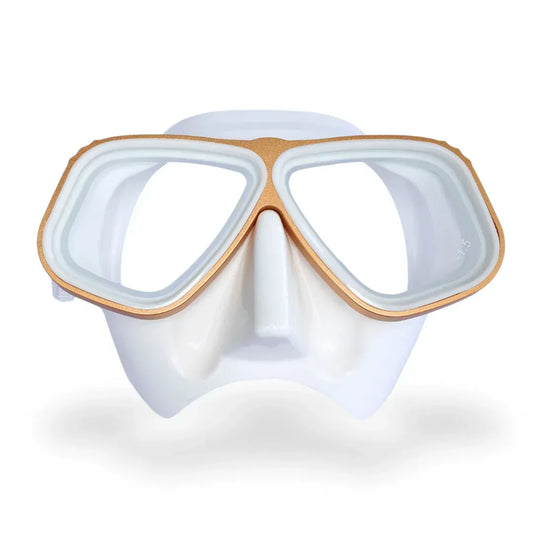
Not every opaque mask skirt is black. Some masks use white, blue, pink, red or other colored silicone.
The important distinction is whether the skirt is clear or opaque. An opaque white or colored skirt still blocks light from passing through the silicone, so it behaves more like a black skirt than a clear skirt in this respect.
Black is particularly popular because its dark surface also helps minimize distracting reflections around the eyes. Lighter opaque colors may reflect more light inside the mask than black, but they still block the peripheral light that would pass through a transparent skirt.
So if you're comparing mask colors, don't assume white = clear. A white opaque skirt and a transparent silicone skirt can feel quite different underwater.
Clear vs. Black Snorkel Mask: Which Should You Choose?
The best choice depends more on the conditions and your personal comfort than whether you're snorkeling or scuba diving.
Choose a dark or black skirt for bright conditions. In sunny, shallow tropical water, blocking peripheral light can reduce glare and reflections. Black is also a strong choice for underwater photography, where stray light can be distracting.
Choose a clear skirt for lower-light conditions or a more open feeling. Clear silicone can be useful on overcast days, in deeper water, or if you simply dislike the more enclosed feeling of an opaque mask.
If both options suit your conditions and fit equally well, choose whichever you prefer. Skirt color isn't a safety feature, and personal comfort is a perfectly valid deciding factor.
Does a Clear Mask Give You Better Peripheral Vision?
Not necessarily. A clear skirt allows more peripheral light to reach your eyes, which can make the mask feel more open. But you aren't actually seeing the underwater environment through the silicone skirt.
Your usable field of view is primarily determined by the size, shape and position of the mask lenses. A well-designed black-skirt mask can therefore offer a wider field of view than a clear-skirt mask with a more restrictive lens design.
Put simply: clear skirts provide more peripheral light; lens design determines your actual field of view.
Fit Matters More Than Skirt Color
Whatever skirt color you choose, fit should come first. Face shape, mask width and skirt shape all affect whether a mask creates a comfortable seal.
Prioritize a mask that seals properly, feels comfortable around your nose and upper lip, and gives you a field of view you're happy with. If you need vision correction, make sure it's also available in the prescription range you need.
Once you've narrowed your options down to masks that fit, skirt color can help you make the final choice.
Not sure which Oceans Optics mask suits your face? Our Face Fit Scanner can help match your facial measurements to our different mask sizes and shapes.
Frequently Asked Questions About Clear vs. Black Snorkel Masks
Is a clear or black snorkel mask better?
Neither is universally better. Dark or black skirts are useful in bright conditions because they block peripheral light and can reduce glare and reflections. Clear skirts allow more ambient light into the mask and can feel brighter and more open. Fit should take priority over skirt color.
Why do some divers wear black masks?
Black silicone blocks light from entering through the skirt, creating a more shaded and focused view. This can be particularly useful in bright conditions and for underwater photography, where stray light and reflections can be distracting. However, black isn't automatically better simply because you're scuba diving.
Do clear snorkel masks turn yellow?
Clear silicone can gradually yellow or become cloudy with age and exposure to UV, sunscreen, skin oils and general use. Proper cleaning and storage can help, but discoloration is generally more noticeable on transparent silicone than on opaque skirts.
Are black snorkel masks better for sunny conditions?
Often, yes. An opaque black skirt blocks peripheral sunlight and can reduce glare and internal reflections. This is why we generally prefer darker skirts for bright, shallow tropical conditions.
Are clear snorkel masks better for beginners?
They can be. Some beginners prefer clear silicone because the additional ambient light makes the mask feel more open and less enclosed. However, there's no requirement for beginners to use a clear skirt. If you're comfortable in a dark mask and it fits you well, there's no reason not to use it.
Does the color of a snorkel mask affect visibility?
The skirt's opacity affects how much peripheral light enters the mask, but it doesn't necessarily change your actual field of view. Lens size, shape and position have a greater effect on how much of the underwater environment you can see clearly.