Why your prescription will not always match a lens we stock
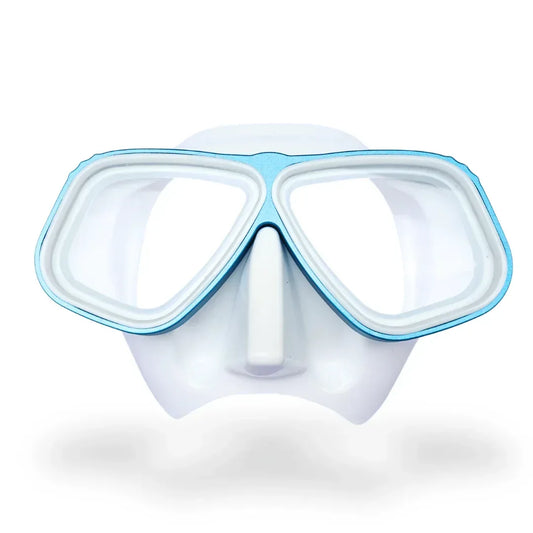
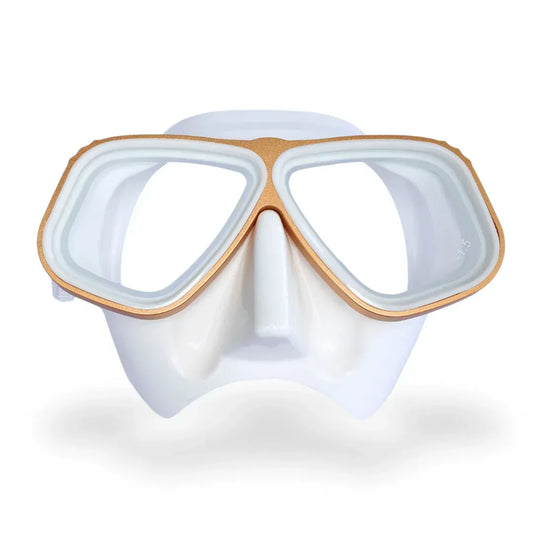
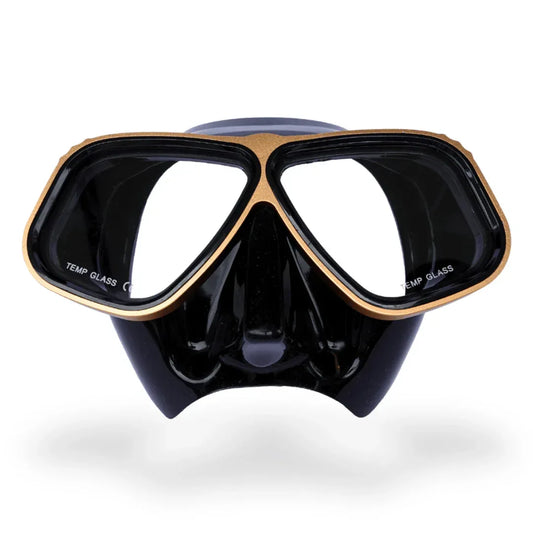
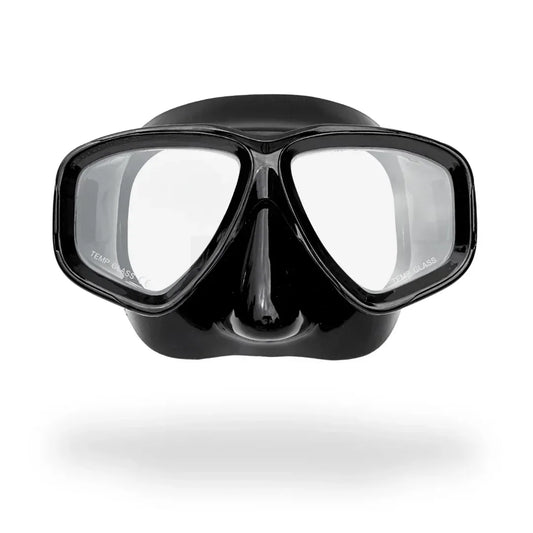
Our prescription snorkel mask and scuba mask lenses come in 0.50 diopter increments. Prescriptions do not. Your sphere might be -1.75, -2.25, or -3.75. None of those land on a 0.50 step, which means every customer with an in-between prescription faces the same question: do you go to the nearest lens below your prescription, or above it?
The old answer was a vague "it depends on comfort." That is not good enough. The right answer depends on your cylinder, and here is why.
The two things happening at once underwater
When you put a prescription snorkel mask on underwater, two things affect your vision that do not apply on land.
Underwater magnification makes objects appear approximately 25% larger and closer than they actually are. This means your eyes need slightly less correction underwater than they do on land. It is a real optical effect, not a rough estimate.
Uncorrected cylinder adds blur that sphere lenses cannot fix. The stronger your cylinder, the more residual blur you will have regardless of which sphere lens you choose. The question is how to minimise it.
These two effects pull in opposite directions. Magnification means you want to be slightly below your sphere. High cylinder means you may need to edge slightly above it. Your cylinder range is what determines which effect wins.
How cylinder determines which way to round
| CYL range | Which way to round | Why |
|---|---|---|
| 0.00 to 0.75 | Round down | Cylinder is low so sphere dominates. Underwater magnification means you do not need the full sphere value. Going below keeps the correction from feeling too strong. |
| 1.00 to 1.75 | Round down, stay close to SPH | Moderate cylinder means moving too far from your sphere increases blur from the uncorrected astigmatism. Stay as close to sphere as possible and let magnification handle the rest. |
| 2.00 to 2.75 | Round up | Higher cylinder means sphere alone leaves noticeable blur. Rounding up edges you toward spherical equivalent, which distributes the remaining blur more evenly across your field of vision. |
| 3.00 and above | Round up, toward SE | Very high cylinder means sphere-only lenses cannot fully resolve the blur regardless of which step you choose. Round up to move closer to spherical equivalent. Set expectations accordingly. |
Worked examples
Here is how the rounding rule plays out with real prescription numbers.
| Prescription | Nearest steps | CYL | Recommendation |
|---|---|---|---|
| SPH -1.75 / CYL -0.50 | -1.50 or -2.00 | Low (0.50) | Round down to -1.50 Magnification does the rest. |
| SPH -2.75 / CYL -1.25 | -2.50 or -3.00 | Moderate (1.25) | Round down to -2.50 Stay close to sphere. |
| SPH -1.75 / CYL -2.25 | -1.50 or -2.00 | Higher (2.25) | Round up to -2.00 Edge toward SE to distribute blur. |
| SPH -3.75 / CYL -3.50 | -3.50 or -4.00 | Very high (3.50) | Round up to -4.00 Move toward SE. Blur will remain but is more evenly spread. |
What our pool test showed about rounding
We tested this with a real prescription in a swimming pool. The tester had R: -4.25 CYL -1.75 / L: -4.50 CYL -2.00. Both eyes were between 0.50 steps after accounting for underwater magnification.
What we found
R: -4.00 / L: -4.50 gave the best vision. Sharp, clear, and the tester could read the pool board easily. Going to -5.00 in either eye, which would have been moving toward spherical equivalent, made things worse. The underwater magnification effect was already compensating for the uncorrected cylinder. Pushing toward SE overshot it.
This confirmed the rule: for CYL in the 1.75 to 2.00 range, rounding down and staying close to sphere outperformed rounding up toward SE. The cutoff sits at CYL 2.00. Below it, round down. Above it, round up.
What about spherical equivalent?
Spherical equivalent (SE) is the calculation optometrists use when only sphere lenses are available. The formula is:
Spherical equivalent formula
SE = Sphere + (Cylinder ÷ 2)
SE is a valid clinical reference point. But it is calculated for land-based vision. Underwater magnification means going to full SE overshoots for most prescriptions. Use it as an upper boundary, not a target.
For low to moderate CYL, your rounding decision should keep you well below SE. For high CYL, you edge toward it without reaching it. Full SE underwater is almost always too strong.
High cylinder expectations
If your cylinder is 3.00 or above, no sphere lens choice will fully correct your vision underwater. The goal is the best practical result, not a perfect match to your glasses. If you need perfect correction for activities like underwater photography or navigation, fully custom prescription lenses are worth considering.
The short version
- CYL under 2.00: round down, stay close to or slightly below your sphere.
- CYL 2.00 and above: round up, edging toward but not reaching spherical equivalent.
- Underwater magnification reduces how much correction you need. It is always a factor.
- Full SE underwater almost always overshoots. Treat it as a ceiling, not a target.
- Not sure? Use our Lens Calculator and it will work this out for your specific prescription.