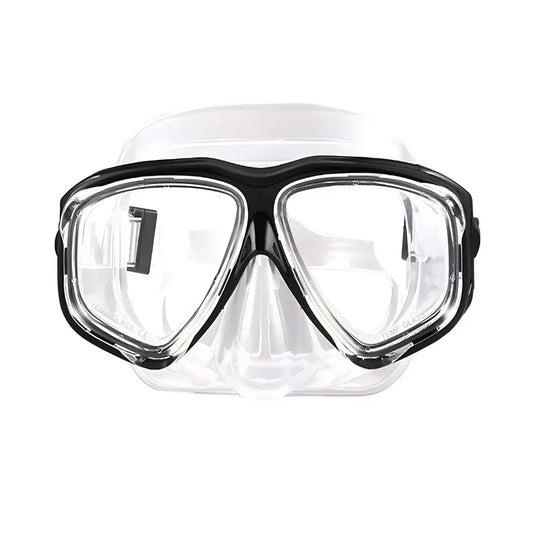
Updated September 2026 to include current guidance on prescription snorkel masks, contact lenses, mask fit and vision-correction options.
If you wear glasses, you may be wondering: can you snorkel with glasses under your mask?
Unfortunately, regular eyeglasses generally don't work underneath a traditional snorkel mask. The arms of your glasses pass underneath the silicone skirt, preventing it from creating a watertight seal against your face. This can cause your mask to leak while you're snorkeling.
The good news is that poor eyesight doesn't have to mean a blurry snorkeling trip. There are several ways to see clearly underwater, including prescription snorkel masks, contact lenses, custom prescription masks, and corrective magnifiers.
In this guide, we'll compare five options for snorkeling when you wear glasses, including the advantages and limitations of each, so you can decide which solution makes the most sense for your vision.
Quick Answer: Can You Wear Glasses With a Snorkel Mask?
Regular glasses should not be worn underneath a traditional snorkel mask. The arms of the glasses interfere with the mask's silicone seal and can allow water to leak in.
For most glasses wearers, a prescription snorkel mask is one of the simplest alternatives because the vision correction is built directly into the mask. Depending on your prescription, other options include contact lenses, fully custom prescription lenses, corrective magnifiers, or snorkeling without correction if your vision allows it.
5 Ways to Snorkel When You Wear Glasses
If you normally rely on glasses to see clearly, you have several options for correcting your vision while snorkeling. The right choice depends on your prescription, how often you snorkel, and whether you need correction for distance vision, close-up vision, or both.
1. Use a Prescription Snorkel Mask
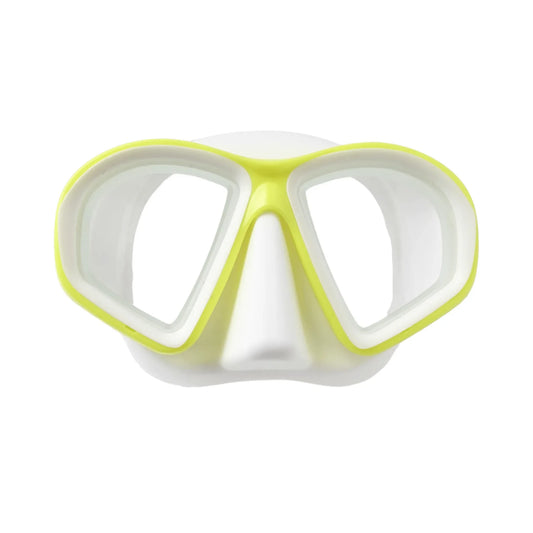
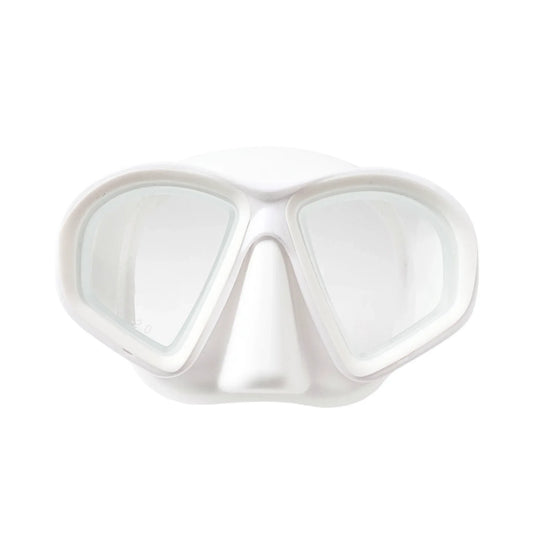
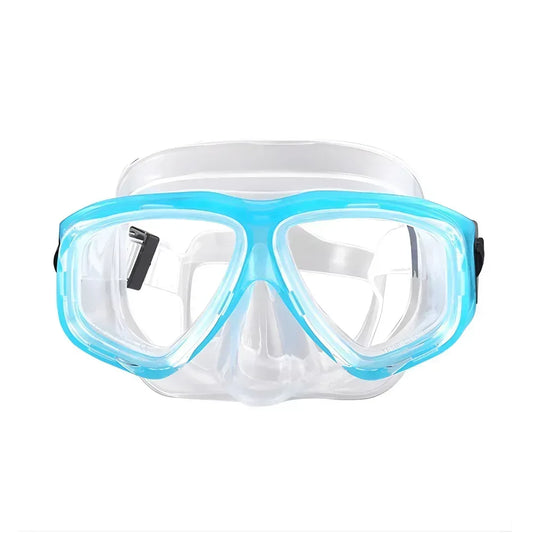
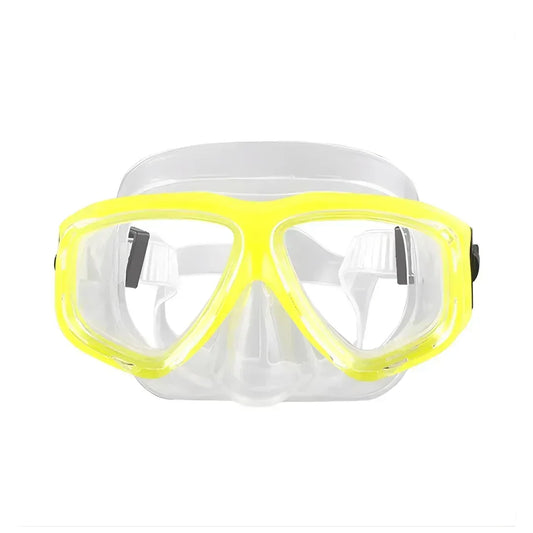
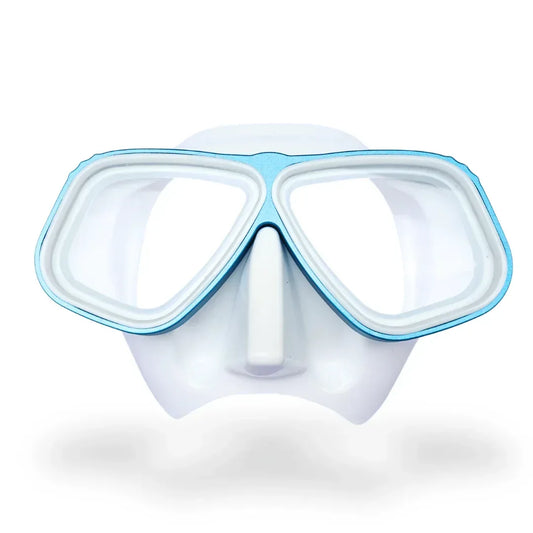
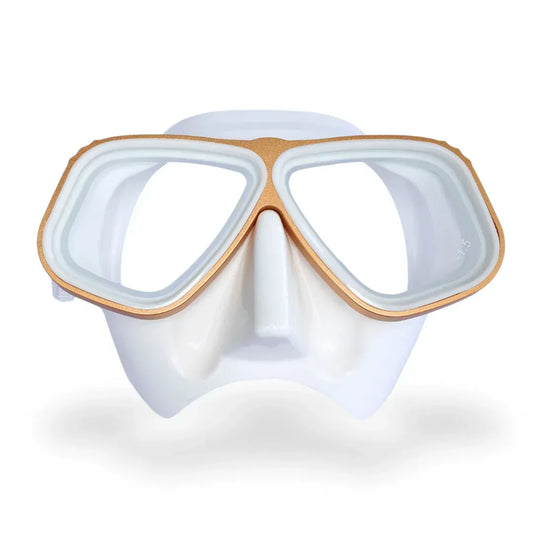
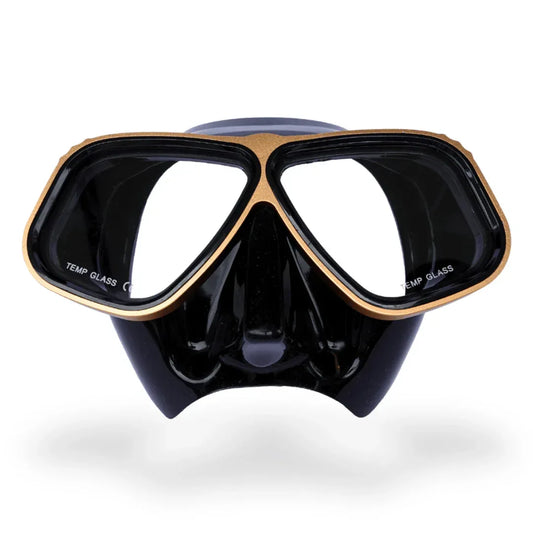
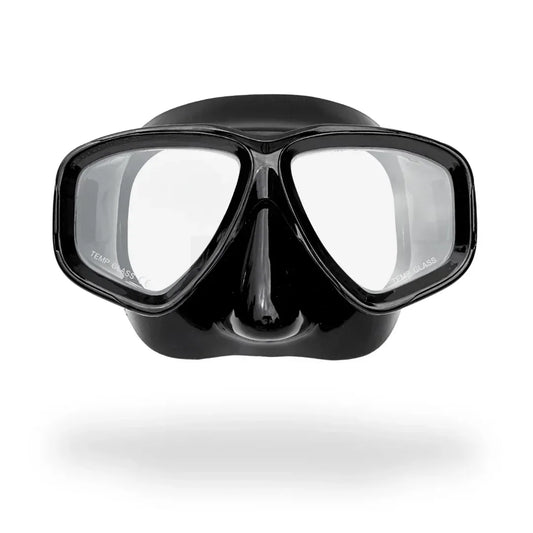
For many glasses wearers, a prescription snorkel mask is the simplest solution. Instead of wearing glasses underneath your mask, corrective lenses are built directly into the mask so you can see clearly underwater without interfering with the seal.
Pre-made prescription masks are available in a range of common nearsighted and farsighted lens strengths. You can also choose a different strength for each eye if your prescription isn't the same on both sides.
They are particularly useful for people who want to see fish, coral, their snorkeling buddy, and other details clearly at a distance.
The main limitation is that pre-made prescription lenses aren't the same as fully custom eyeglass lenses. They generally correct the sphere (SPH) portion of your prescription and may not fully correct more complex vision needs such as strong astigmatism, prism, or progressive prescriptions.
Best for: Most nearsighted or farsighted snorkelers with a straightforward prescription.
2. Wear Contact Lenses With a Snorkel Mask
Some people consider wearing their regular contact lenses underneath a snorkel mask. While this avoids the problem of eyeglass arms breaking the mask seal, contact lenses and water aren't an ideal combination.
Water can contain microorganisms that may contaminate contact lenses and increase the risk of eye infections. Health authorities, including the CDC, recommend keeping contact lenses away from water, including swimming pools, lakes, and the ocean.
If you currently wear contacts, it's worth discussing water activities with your eye-care professional rather than assuming your normal lenses are suitable for snorkeling.
Best for: Speak with your eye-care professional about whether this is appropriate for you.
3. Choose a Fully Custom Prescription Mask
If you have a more complex prescription, a fully custom prescription dive or snorkel mask may be worth considering.
Unlike pre-made prescription lenses, custom lenses can be manufactured specifically around an individual's prescription. Depending on the manufacturer, this may allow correction for vision needs such as significant astigmatism, prism, or prescriptions outside the range available in standard prescription masks.
The trade-off is usually cost and production time. Fully custom prescription masks can be considerably more expensive than masks using pre-made corrective lenses.
Best for: Complex prescriptions that can't be adequately corrected with standard prescription mask lenses.
4. Use Stick-On Magnifiers or Corrective Inserts
Stick-on magnifiers are small corrective lenses that attach to the inside of a snorkel or dive mask. Rather than correcting the entire field of vision, they are generally used to provide magnification in a smaller section of the lens.
They're particularly useful for people who can see well at a distance but need help reading something close-up, such as a dive computer, camera screen, or gauges.
For someone who is significantly nearsighted and wants the entire reef to appear clear, a full prescription mask is usually a more practical solution.
Best for: Close-up reading or additional near-vision correction.
5. Snorkel Without Vision Correction
Depending on how mild your prescription is, you may find that you can snorkel comfortably without any vision correction.
A snorkel mask creates an air space in front of your eyes, and refraction at the air-water interface makes objects underwater appear larger and closer than they really are. However, this doesn't correct refractive errors such as nearsightedness or farsightedness.
Whether you need correction ultimately depends on your individual eyesight and how clearly you want to see underwater. If distant objects are noticeably blurry without your glasses on land, you'll likely appreciate having vision correction while snorkeling too.
Best for: People with mild vision needs who are comfortable functioning without their glasses.

Which Option Is Best for Snorkeling With Poor Eyesight?
The best way to see clearly while snorkeling depends on your prescription and what type of vision correction you need. Here's a quick comparison:
Prescription Snorkel Mask
Best for: Most nearsighted or farsighted snorkelers
Why choose it: Corrects your vision across the mask without needing glasses or contacts.
Keep in mind: Pre-made lenses may not fully correct complex prescriptions.
Contact Lenses
Best for: People who already wear contacts
Why choose it: Allows you to use a standard snorkel mask.
Keep in mind: Water exposure can increase the risk of contact lens-related eye infections.
Fully Custom Prescription Mask
Best for: Strong or complex prescriptions, including significant astigmatism or prism
Why choose it: Can provide more precise vision correction.
Keep in mind: Usually more expensive and may take longer to produce.
Stick-On Magnifiers
Best for: Reading gauges, cameras or seeing objects up close
Why choose it: An easy way to add near-vision magnification.
Keep in mind: Only corrects a small portion of your field of view.
No Vision Correction
Best for: Mild vision needs
Why choose it: No additional equipment required.
Keep in mind: Distant details may still appear blurry.
If you're nearsighted or farsighted with a relatively straightforward prescription, a prescription snorkel mask with pre-made corrective lenses is often the simplest place to start. If your prescription is more complex, particularly if you have strong astigmatism or prism correction, a fully custom prescription mask may be more appropriate.
Prescription Swim Goggles vs. Snorkel Masks: What's the Difference?
If you wear glasses, you may also be wondering whether you need prescription swim goggles or a prescription snorkel mask. Although both can help you see clearly in the water, they're designed for different activities.
Prescription Swim Goggles
Prescription swim goggles sit closely around your eyes and leave your nose uncovered. They're primarily designed for lap swimming, pool workouts and surface swimming.
They're compact and lightweight, but because they don't cover your nose, they aren't designed for scuba diving and aren't usually the best choice for traditional snorkeling.
Best for: Swimming pools, lap swimming and swim training.
Prescription Snorkel & Scuba Masks
A traditional snorkel or scuba mask covers both your eyes and nose, creating an air space in front of your eyes while forming a silicone seal around your face.
This makes it suitable for snorkeling and also allows a scuba diver to equalize the pressure inside the mask as they descend.
A scuba-quality prescription mask can be used for both snorkeling and scuba diving, so you don't need a separate prescription mask for each activity.
Best for: Snorkeling, recreational scuba diving and other underwater activities where a traditional dive mask is appropriate.
At Oceans Optics, our prescription masks are designed for both snorkeling and recreational scuba diving, while our prescription swim goggles are designed specifically for swimming.
How Do You Know If a Prescription Snorkel Mask Will Fit?
Clear vision is only useful if your mask also creates a comfortable, watertight seal. Faces vary in width, length, nose shape and overall profile, which is why the same snorkel mask won't fit everyone equally well.
A properly fitting mask should sit comfortably against your face without obvious gaps around the silicone skirt. You also shouldn't need to overtighten the strap to keep water out. In fact, pulling a mask excessively tight can distort the silicone skirt and sometimes make leaking worse.
When choosing a prescription snorkel mask online, consider:
- Your face size and shape: Some masks are better suited to smaller, medium or wider faces.
- The mask skirt: The silicone skirt needs to make consistent contact with your skin to create a seal.
- Your nose and bridge: Nose-pocket size and mask shape can affect both comfort and fit.
- Your prescription range: The mask that fits your face best also needs to be available in the lens strength you require.

Get a Mask Recommendation Before You Order
If you're unsure which mask will fit your face, you don't have to guess.
Oceans Optics' Face Fit Scanner uses your facial measurements to help match you with a suitable mask size and shape. You can also use our Find Your Mask Quiz to narrow down your options based on your vision needs, activity and fit.
Scan Your Face to Find Your Mask
Dive Instructor Tips for Snorkeling With a Prescription Mask

Once you've found the right prescription and mask fit, a few simple habits can make your first snorkeling experience much more comfortable.
Test Your Mask Before Your Trip
Don't wait until you're standing on a beach halfway around the world to use your new mask for the first time. Test the fit and prescription in a swimming pool or calm, shallow water beforehand. This gives you time to make sure the mask feels comfortable and your vision correction feels right.
Don't Over tighten the Strap
A tighter mask doesn't necessarily create a better seal. The strap should hold the mask comfortably in position without pulling it excessively hard against your face. Overtightening can distort the silicone skirt and contribute to leaking.
Keep Hair Away From the Mask Seal
Before entering the water, check that hair isn't trapped underneath the silicone skirt. Even a small amount of hair crossing the seal can allow water to enter.
Prepare Your Mask for Fogging
A foggy prescription mask defeats the purpose of being able to see clearly. Follow the manufacturer's preparation instructions for a new mask and use a mask-safe anti-fog product before getting in the water.
Practice Somewhere Calm First
If you're new to snorkeling, spend a few minutes getting comfortable breathing through your snorkel in shallow, calm water before heading toward deeper water or a reef. Being comfortable with your equipment makes it much easier to relax and enjoy what you're seeing.
Frequently Asked Questions About Snorkeling With Glasses
Can I wear my regular glasses under a snorkel mask?
Generally, no. The arms of regular eyeglasses pass underneath the silicone skirt of a traditional snorkel mask and interfere with the watertight seal. This can allow water to leak into the mask. A prescription snorkel mask is usually a more practical option if you need distance vision correction in the water.
Can I use a prescription snorkel mask for scuba diving?
Yes, provided the mask is designed and rated for scuba diving. Oceans Optics prescription dive masks can be used for both recreational scuba diving and snorkeling, so you don't need separate prescription masks for each activity.
Can each eye have a different prescription in a snorkel mask?
Yes. Many pre-made prescription masks allow you to select a different lens strength for your right and left eye. This is useful if your prescription isn't the same in both eyes.
At Oceans Optics, you can select the lens strength for each eye individually on compatible prescription masks.
What if my glasses prescription falls between the available lens strengths?
Prescription snorkel mask lenses are often available in set increments rather than every possible eyeglass prescription.
Don't automatically choose the closest number without considering your full prescription. Your SPH and, in some cases, CYL values can affect which lens strength is most appropriate, and vision underwater behaves differently than it does on land.
If you're unsure, use our Prescription Lens Calculator or send us your prescription for help before ordering.
Can I get a progressive or bifocal prescription snorkel mask?
Standard pre-made prescription masks generally use single-vision lenses rather than progressive lenses.
If you primarily need distance correction but also need help seeing something close-up, such as a dive computer or camera, a stick-on magnifier may be an option. More complex progressive or bifocal correction may require a specialist custom prescription mask.
What if I have astigmatism?
It depends on the strength of your astigmatism. Pre-made prescription snorkel masks primarily correct sphere (SPH), although a small amount of cylinder (CYL) can sometimes be considered when selecting an appropriate spherical lens.
If a significant portion of your prescription comes from CYL and AXIS, a standard pre-made lens may not provide adequate correction. In that situation, a fully custom prescription mask may be more appropriate.
Do I need a prescription snorkel mask if my prescription is mild?
Not necessarily. Some people with mild vision correction are comfortable snorkeling without a prescription mask, while others find that even relatively mild blur takes away from the experience.
Think about what your vision is like without glasses on land. If you struggle to clearly see things at the distance you'd want to view fish, coral or your snorkeling buddy, vision correction may make snorkeling more enjoyable.
Ready to See Clearly Underwater?
If you wear glasses, blurry vision doesn't have to be part of snorkeling. The right solution depends on your eyesight, your face shape and the type of correction you need.
If a pre-made prescription snorkel mask is suitable for your vision, Oceans Optics has three free tools to help you choose:
Prescription Lens Calculator — Find the appropriate underwater lens strength based on your glasses prescription.
Face Fit Scanner — Measure your face and find masks suited to your face size and shape.
Find Your Mask Quiz — Get a mask recommendation based on your prescription, activity and fit needs.
Once you know what you need, you can explore our prescription snorkel and scuba masks for nearsighted and farsighted vision.