Everything You Need to Know About
Prescription Dive Masks
From understanding your prescription to choosing the right lens, here is a straightforward guide to getting clear vision underwater.
Types of prescription dive masks
Whether you are nearsighted, farsighted, or somewhere in between, there is a prescription dive mask built for your vision. Here are the main options:
Single Vision (Nearsighted)
Corrects myopia so you can see clearly at distance underwater. Available from -1.00 to -9.00 in our Obsidian range, and -1.50 to -6.00 in the Rover and Lumix.
Single Vision (Farsighted)
Corrects hyperopia for clear distance vision underwater. Available from +1.00 to +5.00 in whole number steps in our Obsidian Farsighted mask.
Bifocal (Reading Segment)
A small magnifying area at the bottom of the lens lets you read gauges and dive computers while maintaining clear distance vision through the rest of the mask.
Mix and match: All of our prescription masks allow a different lens strength in each eye. You do not need to order the same diopter for both sides.
Lens materials and coatings
Not all dive mask lenses are equal. The material affects clarity, durability, and how the lens handles impact and scratches underwater. Here is a quick breakdown:
| Material | Clarity | Durability | Best for |
|---|---|---|---|
| Tempered Glass | Excellent | High | Scuba diving and freediving |
| Resin Plastic | Good | Moderate | Casual snorkelling |
| Polycarbonate | Good | High impact resistance | Surface water sports |
All Oceans Optics prescription lenses are tempered glass. Tempered glass offers the best optical clarity for underwater use, resists scratches, and meets dive safety standards. We do not use plastic lenses.
Underwater magnification
When you look through a dive mask, the flat lens creates an air space between your eyes and the water. Light bends as it crosses from water into that air space, which causes objects to appear approximately 25% larger and closer than they actually are. This is the same optical effect that makes fish look bigger than they are when you first look through a mask.
For prescription wearers, this matters because the magnification effect partly compensates for your correction needs underwater. If you used your exact land prescription in a dive mask, most people find it feels too strong, causing eye strain on longer dives. This is why we apply a small reduction when calculating your recommended underwater lens strength.
Example: Land prescription -3.50
This is the baseline rule. If you have astigmatism (a CYL value on your prescription), the adjustment changes. See the section below for how that works.
Use our lens calculator: Our free online tool handles this calculation automatically, including adjustments for astigmatism. Just enter your prescription values and it will give you the recommended lens strength for each eye. Try the calculator here.
Astigmatism and dive masks
If your prescription includes a CYL (cylinder) value, you have astigmatism. Our lenses are spherical, meaning they correct for near or farsightedness but cannot directly correct the directional blur caused by astigmatism. However, the sphere value we choose still needs to account for the CYL on your prescription, otherwise the total optical power will be off.
The standard -0.50 underwater reduction is adjusted based on how much astigmatism you have. Here is the general pattern:
Low CYL (0.00 to 0.75)
Standard -0.50 reduction applies. Clear improvement expected underwater. Residual blur from the uncorrected astigmatism will be minimal for most people.
Medium CYL (1.00 to 1.75)
Reduction is adjusted or removed depending on whether your CYL is plus or minus. We stay closer to your sphere value to avoid misaligning the total correction.
High CYL (2.00 and above)
We stay at or very close to your sphere value. At this level, reducing further would underperform. Some residual blur will remain that our lenses cannot remove.
Prescription: SPH -3.00, CYL -1.50
The sign of your CYL (plus or minus) also affects the recommendation. If your prescription uses plus cylinder notation rather than minus cylinder notation, the calculation works differently. We cover this in detail in our full astigmatism guide.
Choosing the right prescription mask
Getting the lens strength right is only part of the decision. The mask also needs to fit your face properly, otherwise it will leak no matter how good the prescription is. Here is what to consider:
Face fit first
Measure your eye width and mask height before choosing a model. Our face fit tool at facefit.oceansoptics.com uses your phone camera to measure you automatically.
Lens range
Check that your recommended strength falls within the range of the mask you want. The Obsidian covers -1.00 to -9.00 (nearsighted) and is the widest range we offer.
Seal colour matters
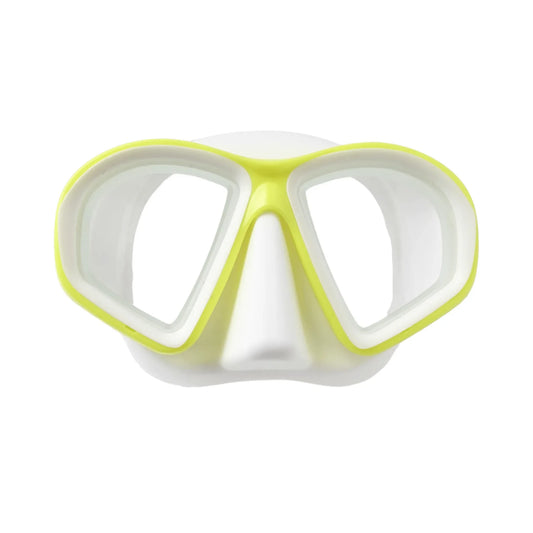
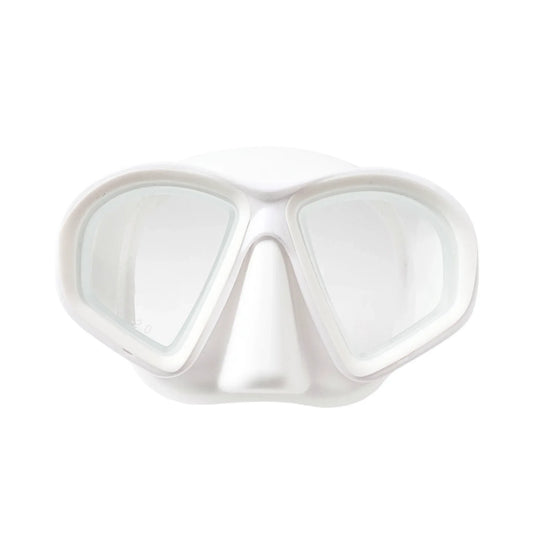
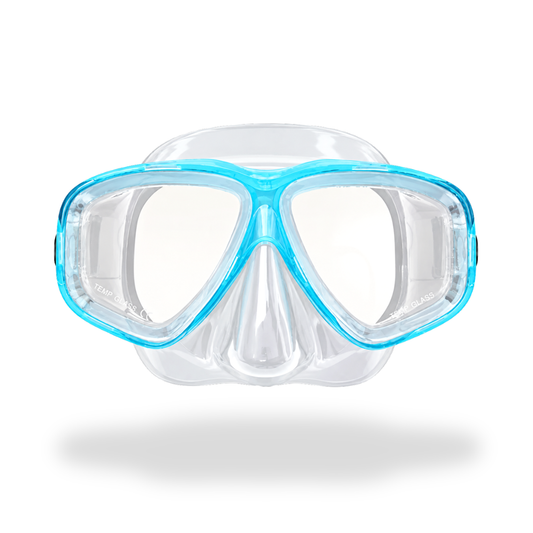
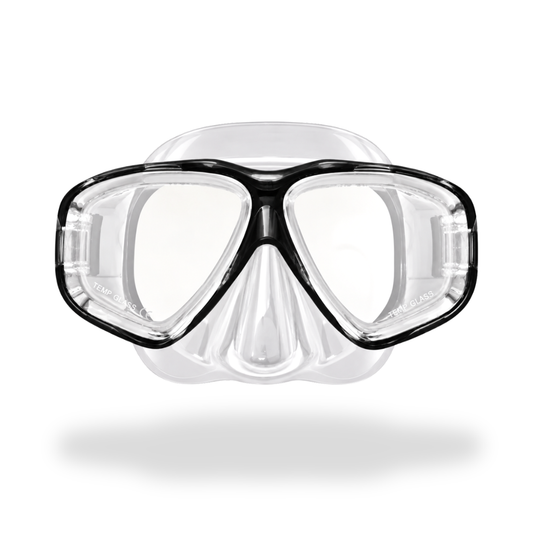
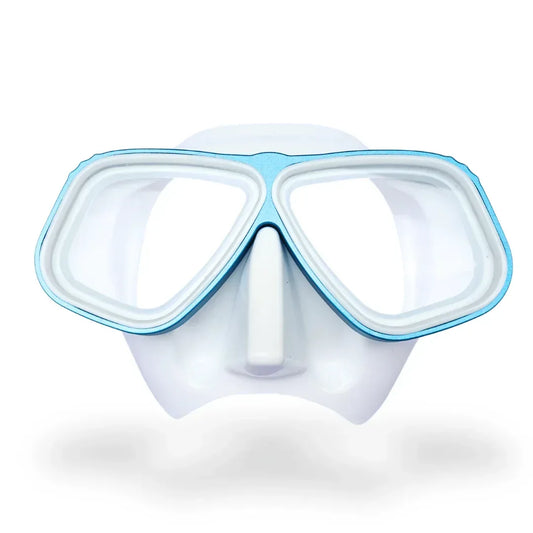
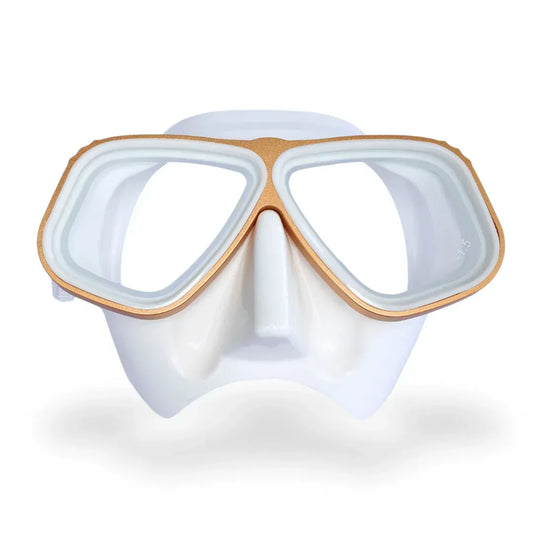
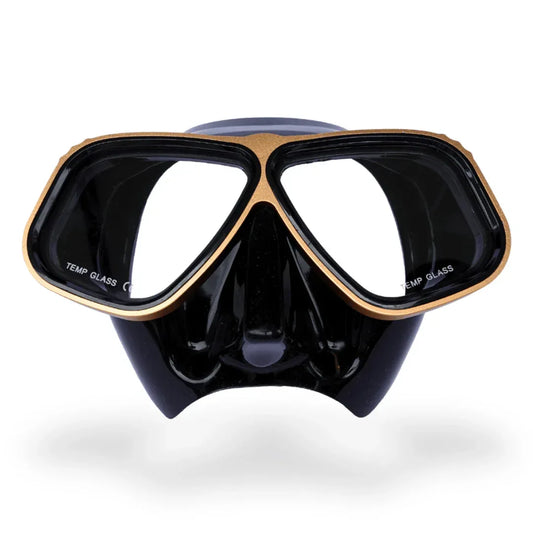
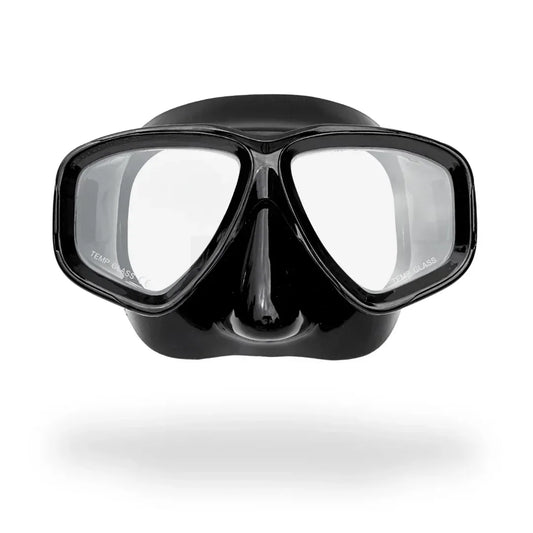
A clear silicone seal brightens the view and feels more open. A black seal reduces peripheral light, which some divers prefer in bright tropical conditions. Both seal equally well.
We review every prescription before we build. If your ordered lens strength does not match your prescription, or if something looks off, we will contact you before building your mask. You will never receive the wrong lenses without having had the chance to correct it first.
Unlock your underwater potential
Every Oceans Optics mask purchase includes our comprehensive how-to guide, covering everything from fitting and clearing your mask to maintenance and care after diving in saltwater. Whether you are a first-time snorkeller or an experienced freediver, the guide walks you through the essentials so you get the most out of your mask from day one.
Topics covered include: how to check and adjust the fit, how to clear a flooded mask underwater, anti-fog tips, care after salt water and chlorine exposure, and what to do if your mask leaks. The guide is included automatically with every order.